
Wildfire Risk Reduction That Works
Fire needs fuel. Fuel is the one thing you can change before the smoke. Here is how fuel management actually works.
Wildfire risk reduction is work you do before the smoke: managing the fuels around homes, communities, and infrastructure so that when fire arrives, it burns less intensely, moves slower, and gives suppression a chance. This guide covers the principles behind fuel management and the treatments that put them into practice across BC and Alberta.
Fire needs fuel, and fuel is the part you control
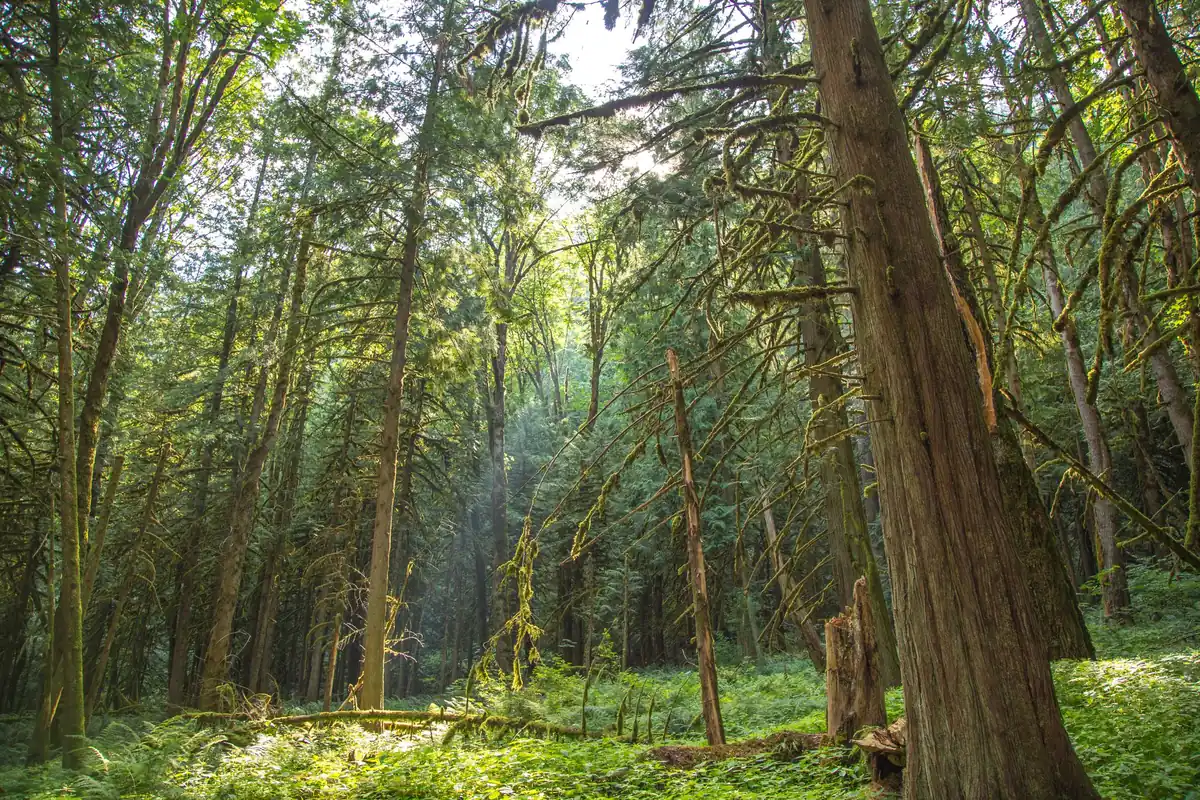
Weather and terrain drive fire behaviour, and you control neither. Fuel is the third driver, and it is the one that can be changed in advance. Fuel management thinks in three layers:
- Surface fuels: dead grass, needles, branches, and woody debris on the ground. They carry fire across the landscape.
- Ladder fuels: low limbs, brush, and small trees that let a surface fire climb into the canopy.
- Crown fuels: the tree canopy itself. Once fire is in the crowns and they are close enough to carry it, it moves fast and burns hot enough to overwhelm suppression.
Break the ladder and separate the crowns, and a potential crown fire drops back to a surface fire that crews can actually fight.
The treatments
- Thinning reduces stand density so crowns no longer touch, removing the continuous canopy a crown fire needs.
- Pruning lifts the live crown, removing the low limbs that ladder fire upward.
- Surface fuel cleanup deals with the slash, deadfall, and brush that feed intensity, by removal, chipping, or piling and burning in safe conditions.
- Fuel breaks and fire guards are constructed gaps in the fuel, from thinned buffers to cleared guards, placed where they protect values or anchor suppression.
- Defensible space applies all of the above in zones around a structure, working outward: the ground nearest the building matters most, then the surrounding stand.
These principles align with the FireSmart guidance used across Canada. The right prescription depends on the stand, the slope, the values at risk, and the budget, which is why serious programs start with an assessment rather than a chainsaw.
Fuel management is maintenance, not a one-time fix
Vegetation grows back. Thinned stands infill, pruned trees put on new low growth, and surface fuels re-accumulate. A treatment that is never maintained slowly gives back its protection, so plan on periodic follow-up work the same way a utility plans corridor cycles.
Who this work is for
Communities and local governments running wildfire protection programs, utilities and industry protecting infrastructure, First Nations protecting communities and territory, and rural property owners in the wildland interface. Much community-level work in BC and Alberta is delivered through funded wildfire risk reduction programs; if you are scoping one, our wildfire mitigation crews assess, prescribe, and carry out the treatments.
Fuel management questions
What is the difference between fuel management and fire suppression?
Suppression fights the fire once it is burning. Fuel management happens years earlier: it changes what the fire will have available to burn, so that suppression has a fighting chance and structures are defensible.
Does thinning a forest really slow a wildfire?
Separating crowns and removing ladder fuels makes it much harder for fire to climb into and carry through the canopy. A fire held on the surface burns cooler and slower, which is the difference between a fire crews can work and one they can only watch.
When is the best time to do fuel management work?
Outside the fire season, when burning windows are open for disposing of debris and there is no restriction on power tools in the bush. In practice that means planning in spring or summer and cutting in the shoulder seasons and winter.
What is a fire guard?
A constructed break in the fuel, cleared down to mineral soil or to a specified standard, placed to stop or slow fire spread and to give suppression crews a defensible line to work from. Guard construction is one of the services on our wildfire mitigation page.
Protecting a community,
site, or property?
Active hazard or urgent timeline? Call and we'll respond the same day. Detailed quotes within two business days.