Wildfire Mitigation in the Comox Valley
Tree removal, fuel reduction, and defensible space for Comox Valley interface properties. Certified crews, property-specific assessment.
Wild Timber Industries provides wildfire mitigation in the Comox Valley. For rural and residential properties in the interface, tree removal for wildfire risk and fuel reduction are the most direct ways to protect homes and outbuildings from fire.
Our certified crews assess the property, identify the trees and fuels that raise the risk, and remove or thin them to create defensible space. Then we maintain it so it stays effective through the fire seasons ahead.
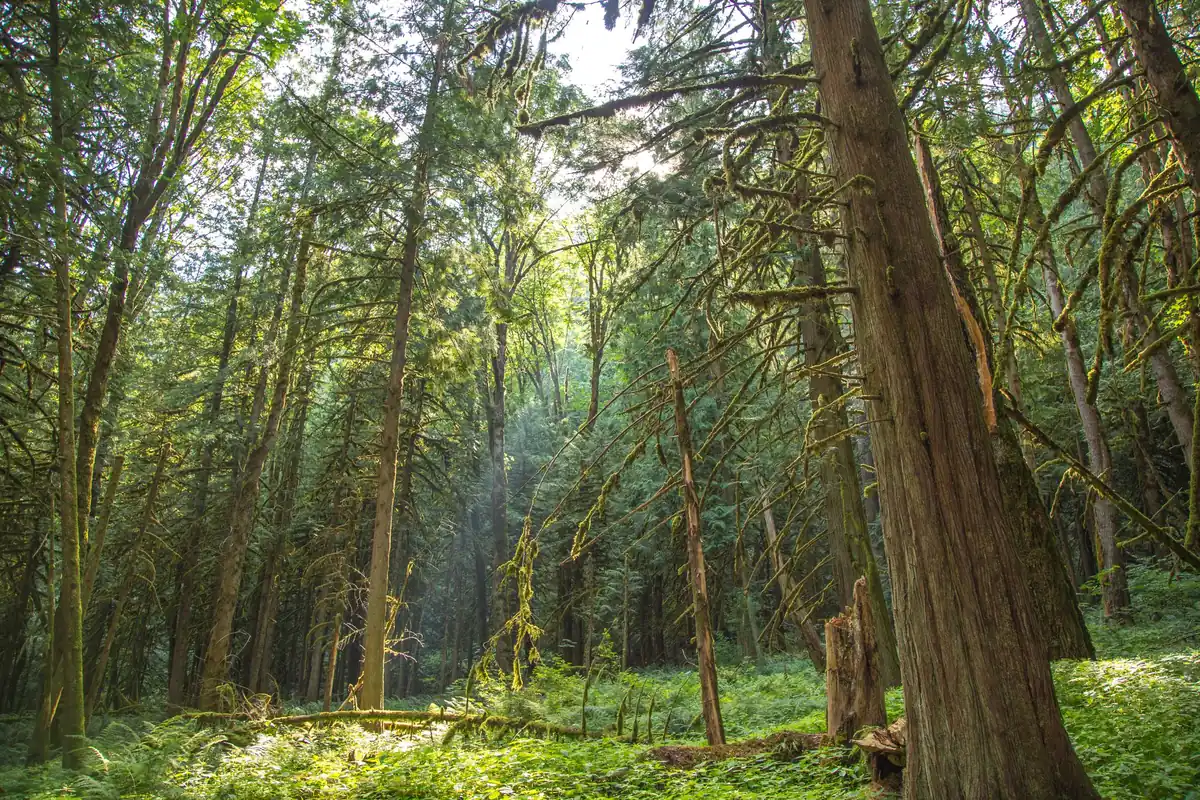
Comox Valley defensible space.
Tree removal and fuel reduction for wildfire risk on Comox Valley interface properties.
Tree removal for fire risk
Certified falling of the specific trees that present the highest ignition and fire spread risk around your structures.
Fuel reduction and thinning
Reducing the density and continuity of fuels in the zones around your property that most affect fire behaviour.
Defensible space maintenance
Returning on a seasonal cycle to keep fuel loads down and defensible space effective as vegetation re-establishes.
Protecting Comox Valley properties from wildfire
The Comox Valley's mix of Douglas-fir, Garry oak, and mixed conifer forest meets rural and residential land in a classic wildland-urban interface. The valley floor between Courtenay and Comox sits close to forested terrain that dries significantly by late summer. Properties with dense understory, ladder fuels, and mature conifers close to structures face meaningful fire risk during the August and early September dry season, a window that has been extending in recent years.
Tree removal for wildfire risk in the Comox Valley focuses on the trees and fuel conditions that most directly threaten structures. Our certified fallers handle the assessment and the falling under one contract, working from the structure outward in the priority zones recognized by BC's wildfire prevention guidelines. Removing tall conifers that overhang structures, taking out dense clusters of saplings that form fuel ladders, and clearing the immediate 10-metre zone around buildings are the most common elements of Comox Valley mitigation work.
We discuss ongoing maintenance with every property owner. The Comox Valley's wet growing season means cleared areas re-establish quickly, and the first few years after initial clearing require the most active maintenance. After that, an annual inspection and light thinning cycle usually keeps the risk down effectively.
This is part of our wider Island work. See wildfire mitigation on Vancouver Island and our dedicated page on ladder fuel removal.
Comox Valley wildfire mitigation questions
Do you remove trees for wildfire risk in the Comox Valley?
Yes. Tree removal for wildfire risk is a core part of our Comox Valley work. Our certified fallers assess and remove trees that present the highest ignition and fire spread risk, as part of a broader defensible space and fuel reduction program.
How close to the house do you work?
We work in all three defensible space zones: the immediate 1.5-metre zone around the structure, the 10-metre zone where the highest risk of ignition exists, and the 10-to-30-metre zone where reducing fuel density and ladder fuels most impacts fire behaviour.
Do you maintain the defensible space after clearing?
Yes. We offer seasonal maintenance to keep fuel loads down as vegetation grows back, which matters in the Comox Valley where the wet growing season rebuilds understory quickly.
What makes the Comox Valley a wildfire risk area?
The Comox Valley sits in the wildland-urban interface where forested terrain meets rural and residential properties. The area's mix of Douglas-fir, Garry oak, and mixed conifers combined with summer dry spells creates fire conditions that can escalate quickly. Properties with dense understory, ladder fuels, and trees close to structures are at meaningful risk during hot, dry Augusts, and that risk increases as regional fire seasons extend.
Explore related work
Comox Valley property
at risk?
Tell us about the property and what you are protecting. We will come back with a plan and price, usually within two business days.